Private Jet Charter in Raleigh, NC: What to Know Before Booking
- Lindsey Barber
- 0 Comments
Most people booking their first charter flight are surprised twice. Once by how straightforward the experience is, and once by the invoice, because the hourly rate they were quoted is roughly 70% of what they actually pay.
Neither surprise is necessary. Charter pricing follows consistent logic, and once you understand the handful of line items behind the hourly rate, quotes become easy to compare.
Here is what to know before booking a private jet charter in Raleigh, NC, including how pricing actually works, where to depart from, and the questions worth asking any operator.

How Charter Pricing Actually Works
The hourly rate is the headline, not the total. Industry analysis puts the flight-hour charge at roughly 70% of a typical final invoice. The rest comes from items that are entirely predictable once you know to ask.
Flight time, not travel time. You are billed for the time the aircraft is operating, plus roughly 0.2 hours of taxi time per leg.
Repositioning legs. If the aircraft isn’t already where you are, someone pays to bring it there and to send it home afterward. A jet based at RDU flying a Raleigh departure has no repositioning cost. One flown in from another state does. This single factor explains most of the gap between two quotes for the same trip, and it’s the strongest reason to start with locally based aircraft.
Daily minimums. Operators typically apply a minimum of two to three billable hours per day. A 50-minute hop to Charlotte will be billed at the minimum, not at 50 minutes.
Federal excise tax. Domestic commercial air transportation carries a 7.5% federal excise tax plus segment fees. Some quotes include it, some don’t. Always ask which.
Airport and handling fees. Landing fees, ramp fees, and FBO handling at both ends. These vary considerably by airport and are a real reason to consider your departure airport.
Crew expenses. Overnight trips incur crew hotel and per diem costs. A same-day round trip avoids them entirely, which is why day trips often price better than overnights on the same routing.
Catering, ground transport, de-icing, and peak-day surcharges. Mostly modest, except de-icing, which can be significant in winter, and peak-day pricing around holidays and major events.
See Flight Group’s charter operations →
What It Costs by Aircraft Category
Published 2026 ranges vary widely depending on whether a source is quoting operator rates or jet card pricing. These are broad market ranges for charter, before the fees above:
| Category | Example aircraft | Typical hourly range | Best suited to |
| Turboprop / very light jet | King Air 350, Phenom 100, HondaJet | $2,500 to $4,500 | Short regional hops, 4 to 6 passengers |
| Light jet | Phenom 300, Citation CJ3+, Learjet 75 | $4,000 to $7,000 | Raleigh to Florida, New York, the Midwest |
| Midsize jet | Citation XLS+, Hawker 900XP, Latitude | $5,500 to $9,500 | Raleigh to Dallas, Chicago, Denver |
| Super-midsize jet | Challenger 350, Citation Longitude | $7,000 to $12,500 | Nonstop transcontinental, 8 to 10 passengers |
| Heavy jet | Gulfstream G550, Falcon 900, Challenger 605 | $9,500 to $16,000+ | International, long-range, larger groups |
Use these for orientation, not budgeting. The honest answer for any specific trip comes from a quote built on your actual routing, dates, and passenger count.
A worked example makes the structure clearer. A light jet at $5,000 per hour for a Raleigh to Naples round trip, with 2.5 hours each way, 0.4 hours of taxi, no repositioning, and a same-day return, runs roughly $27,000 in flight time, plus FET and handling at both ends. Add an overnight and crew expenses, and they enter the picture. Fly the same trip on an aircraft repositioning in from another region, and you could add several thousand dollars before anyone boards.
Where to Depart From in the Triangle
Most people assume Raleigh-Durham International is the only option. It often is the right one, but not always.
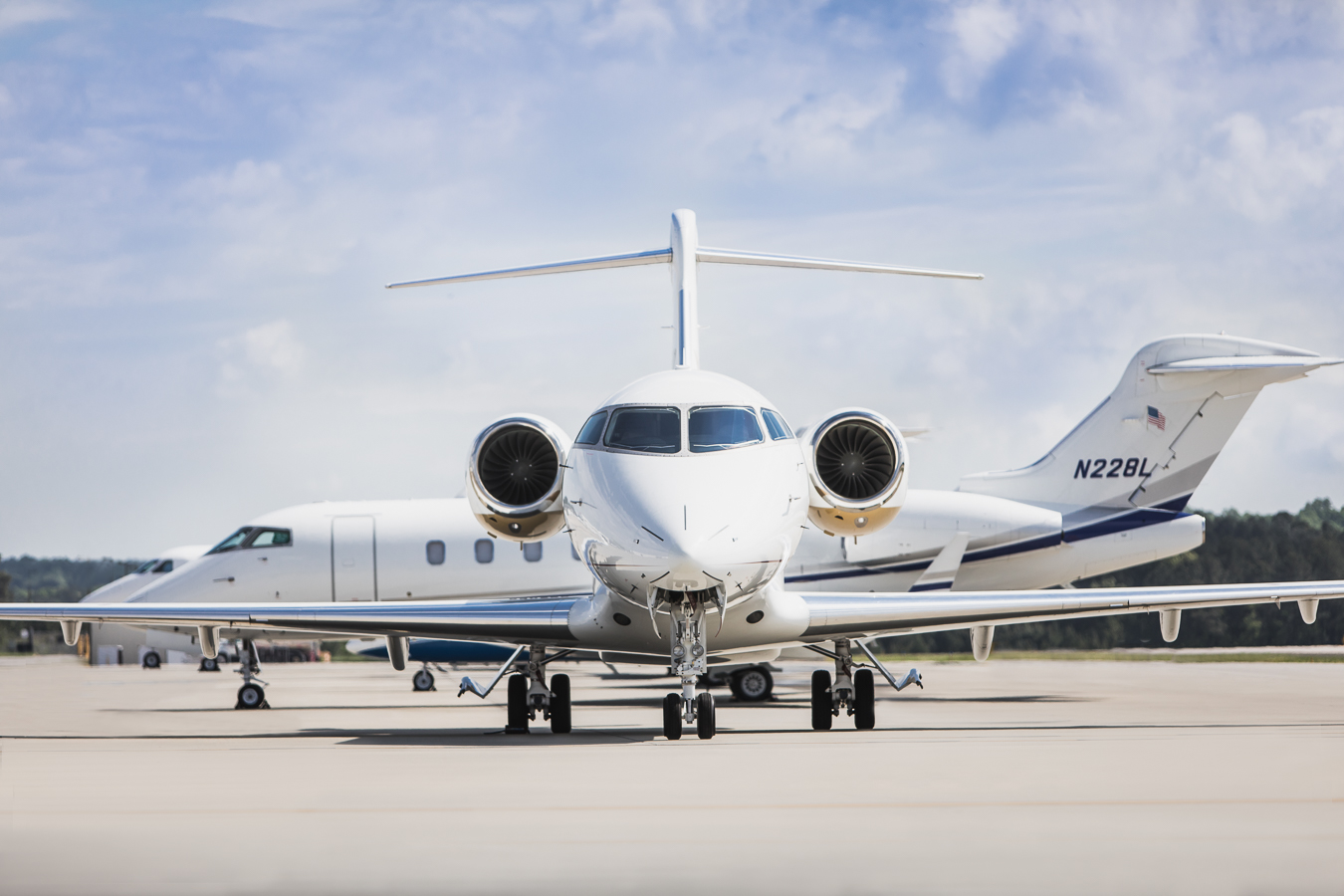
Raleigh-Durham International (RDU) is the regional anchor for private flights from RDU, with private terminal facilities separate from the airline terminals, customs and immigration handling for international arrivals, and a deep maintenance and vendor market. It is also where we base and manage our own aircraft. If your trip is international, or you need the longest runways and fullest services, RDU is the answer.
Raleigh Executive Jetport (TTA) in Sanford is an FAA-designated reliever for RDU, with a 6,500-foot runway, a modern terminal, on-field maintenance, and roughly 250 based aircraft. For many Triangle departures, it offers faster ramp access and lower handling costs with no meaningful tradeoff. Whether it saves you time depends on where in the Triangle you’re starting from.
Johnston Regional (JNX) and other Triangle-area general aviation fields can make sense for specific departures.
The practical point: the right departure airport depends on where you live, where you’re going, and whether the aircraft you want is already based nearby. An operator with local aircraft can answer that quickly. A broker working from a national database usually cannot.
The Question Most People Don’t Ask: Broker or Operator?
This matters more than anything else on this page, and almost nobody asks it.
When you search for a Raleigh private jet rental, most results are brokers. A broker doesn’t own or operate aircraft. They take your trip, find an operator with a suitable aircraft, and add a margin. Good brokers add genuine value through market access and negotiating leverage, particularly for unusual routings.
An operator holds the FAA Part 135 certificate, employs the crew, maintains the aircraft, and is legally responsible for the flight.
Booking direct with an operator generally means three things: no intermediary margin, certainty about exactly which aircraft and crew you’re getting, and a single party accountable if something changes. Booking through a broker can mean the aircraft comes from a third party you haven’t vetted, and the quote reflects a markup you can’t see.
Neither model is wrong. But you should know which one you’re talking to. Ask directly: do you operate this aircraft on your own certificate?
Questions Worth Asking Before You Book
- Do you operate the aircraft, or are you sourcing it? The question above.
- What’s included in this quote, and what isn’t? Specifically, FET, handling, catering, de-icing, and crew expenses.
- Is there repositioning in this price? If so, how much?
- What’s the daily minimum?
- What safety ratings do you hold? ARGUS, Wyvern, and IS-BAO are independently audited. Ask which and when the last audit was.
- What’s your crew experience on this aircraft type?
- What happens if the aircraft goes out of service? Recovery plans vary enormously, and this question separates operators when something goes wrong. It depends entirely on how deep an operator’s maintenance and operational oversight goes.
- What’s the cancellation policy?
Getting a quote should be simple. Tell us the route, dates, and how many people are traveling, and we’ll get back to you with a figure that includes the fees rather than hiding them. Request a quote from Flight Group.
Lead Time, Luggage, and Practicalities
Booking window. Straightforward domestic trips can often be arranged within 24 to 48 hours, sometimes less. Peak periods, holidays, and large-group or international trips need considerably more notice. If your dates are fixed and the trip matters, earlier is better.
Arrival time. Plan to arrive 15 to 30 minutes before departure, not two hours. You park near the aircraft, walk through a private terminal, and board.
Identification. Government-issued photo ID for domestic flights, passports for international. The operator handles customs arrangements for international arrivals.
Luggage. The real constraint on light jets. Baggage capacity, not seat count, is what most often forces a move to a larger aircraft. Tell your operator about golf clubs, skis, or oversized items at quoting, not at the ramp.
Pets. Most operators allow them, which is a common reason people move from airlines to charter. Confirm in advance.
Passenger count. Be accurate. Maximum seating and comfortable seating are different numbers, and so are maximum seating with full fuel and baggage on a long leg.
Why Raleigh Works Well for Charter
The Triangle’s mix of corporate headquarters, research institutions, universities, and medical centers produces steady business aviation demand, which means a reasonable supply of locally based aircraft and crews.
Geographically, Raleigh sits within comfortable range of most eastern US business centers. New York, Boston, Chicago, Atlanta, Dallas, and the Florida markets are all practical same-day round trips in a light or midsize jet, which is the use case where charter economics work best: multiple cities in a day, home for dinner, no overnight crew costs.
For private jet charter in North Carolina more broadly, Charlotte and Greensboro serve their own markets, and an operator with aircraft positioned across the state can often find a better answer than one working from a single base.
Working With a Local Operator
Flight Group Corporation has operated from Raleigh-Durham International Airport for nearly three decades, managing and operating aircraft for owners across North Carolina. That matters for charter in a specific way: the aircraft are here, the crews are here, and the maintenance oversight is ours.
When you ask us for a quote, we can tell you which aircraft, which crew, and what the actual cost structure looks like, because we are the operator and not an intermediary.
Contact Flight Group Corporation for a quote on your trip, or learn more about private jets in Raleigh.
If You Own an Aircraft
A note for a different reader. If you already own a jet and found this page while comparing charter costs, the economics run the other way for you. An aircraft that sits unused most of the year carries the same fixed costs regardless, and placing it on a charter certificate lets that time generate revenue against them.
That is a longer conversation involving FAA conformity, maintenance program changes, and owner availability, and it is not right for every aircraft. Our aircraft management services cover both paths, whether you keep the aircraft entirely private or put it to work.
Frequently Asked Questions
How much does private jet charter in Raleigh, NC cost?
Is private jet charter safe?
Can I fly internationally from Raleigh on a charter?
What is an empty leg flight?
Can I bring my pet on a private jet?
How many passengers can a private jet carry?
Do I need to arrive early for a private flight?
Related Posts


Leave A Comment
You must be logged in to post a comment.